9th International Starlight Astrotourism Meeting concludes in Montsec with new challenges and partnerships for astrotourism
Sky protection, international cooperation, training and territorial development shape the conclusions of the four-day meeting
2026 / 11 / 09
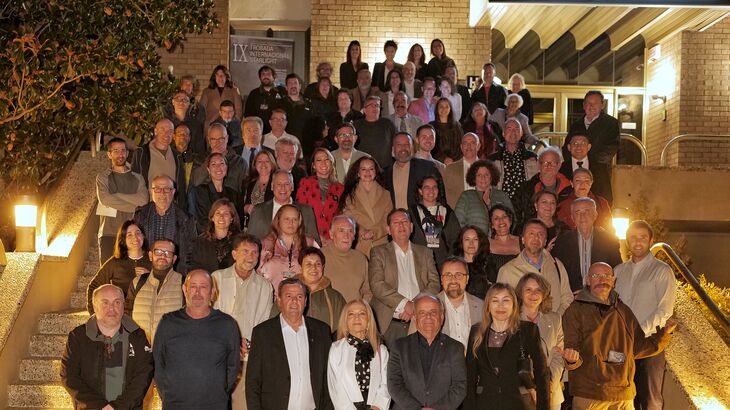
The 9th International Starlight Astrotourism Meeting, held from 3 to 6 November 2026 in Cellers, Lleida, has concluded with a shared vision for the future of the sector and a commitment to advancing night sky protection, the professional development of those providing astrotourism experiences, and cooperation among public administrations, businesses, the scientific community and local territories.
Over four days, the Montsec Starlight Tourist Destination and Reserve brought together more than 150 Starlight Network representatives from different countries to share good practices, examine the main challenges facing astrotourism and present projects that demonstrate its potential to contribute to local development, science education and the conservation of natural and cultural heritage.
The ninth edition addressed issues including light pollution, the opportunities created by astronomical events, accessibility, tourism innovation and new forms of communication. It also strengthened the Starlight Foundation’s international ties as its network continues to grow and diversify its initiatives.
Looking ahead to the 20th anniversary of the Declaration of La Palma
One of the main themes of the Meeting was reflection on the progress of the Starlight movement, which in April 2027 will commemorate the 20th anniversary of the Declaration of La Palma in Defence of the Night Sky and the Right to Starlight.
At the opening of the conference programme, Antonia Varela, managing director of the Starlight Foundation, reviewed the evolution of the network, the growth of certified initiatives and their increasing presence in discussions on international cooperation, regulation, sustainable development and demographic challenges.
The astrophysicist highlighted the importance of turning scientific knowledge into concrete action and continuing to connect sky protection with biodiversity, environmental quality, energy efficiency and opportunities for local communities.
In this context, the Starlight Foundation continues to promote, alongside BPW Spain, the proposal for an SDG 18 dedicated to Sky Quality and Access to Starlight, with the aim of including the protection of the night-time environment among major international sustainability commitments.
The 2027 anniversary will provide an opportunity to take stock of the progress made and strengthen cooperation between institutions and civil society in defence of a shared heritage.
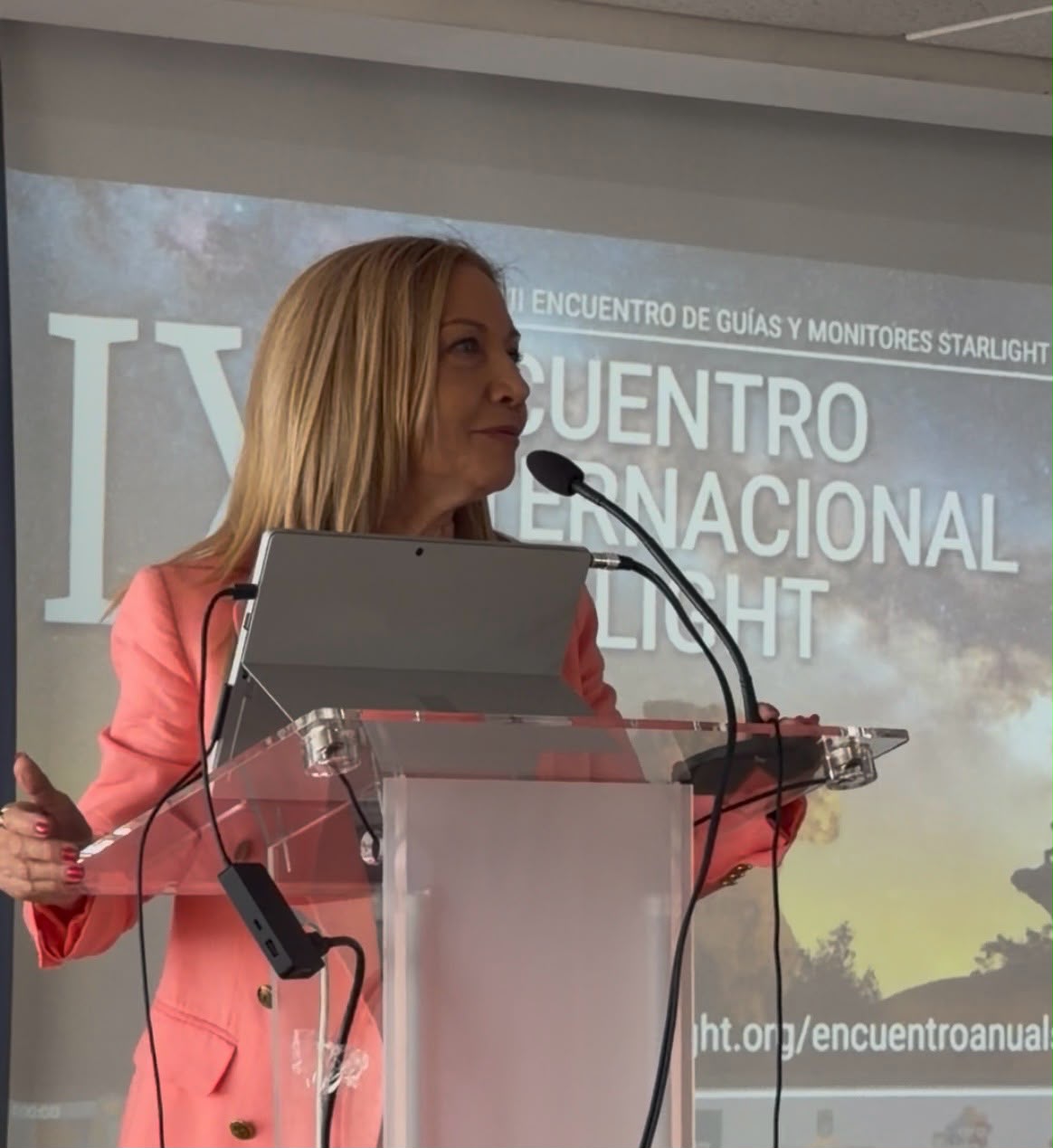 Antonia Varela / Credit:Turismodeestrellas.com.
An international guide to support the development of the sector
A central feature of this edition was A Guide for the Development of Astrotourism, produced by UN Tourism and the Starlight Foundation, officially presented at FITUR 2026 and discussed during a round table in Montsec.
The publication is a reference tool for public administrations, destinations, businesses and professionals seeking to develop astronomical tourism experiences that are integrated into their surroundings.
During its presentation, Antonia Varela emphasised the importance of adapting each proposal to the identity of its territory: “It is always important for each territory to make its offering distinctive, and that is also what makes us unique.”
The guide offers recommendations on night sky protection, tourism product design, accessibility, public-private cooperation and local community participation, as well as international case studies.
The round table provided an opportunity to reflect on its practical application and on the need to equip the sector with tools that support responsible growth, based on the quality of experiences and the conservation of the environment.
The commitment of public administrations: projects that need continuity
The Meeting highlighted the essential role of public administrations in protecting the sky and developing astrotourism.
The host territory, Montsec, shared its experience of more than twenty years of work in darkness conservation, scientific research and astronomy outreach. The presentation of its Action Plan for Night Sky Protection offered an insight into new areas of work and the importance of maintaining cooperation among institutions.
Elsewhere in Catalonia, this commitment is also reflected in Aigüestortes i Estany de Sant Maurici National Park, a Starlight Reserve and Tourist Destination, where sky protection and its educational and tourism value form part of an ongoing strategy.
Other institutional experiences came from Andorra, which is preparing to host the 10th International Starlight Meeting in 2027; Ávila, with its work surrounding the August solar eclipse; and Las Hurdes, which presented a strategy integrating astrotourism with the cultural landscape and tourism intelligence.
Representatives from Cee, Galicia, the municipality that hosted the 7th International Starlight Meeting in 2024, were also present. The programme highlighted the importance of municipal action, including Zaragoza’s ongoing public lighting upgrade.
The experiences shared underlined the need for stable public policies and commitments that extend beyond political changes, since protecting the night sky and establishing destinations require long-term planning.
Protecting the night through concrete action
Light pollution featured prominently in the programme, with scientific, technical and territorial proposals to reduce its effects.
Susana Malón, from Lumínica Ambiental and a member of the Spanish Lighting Committee, presented the CEI–IDAE Technical Guide to the Design, Implementation and Control of Outdoor Lighting with Reduced Light Pollution, a tool intended to improve lighting installations and reduce their environmental impact.
Federico de Paz, from the Technical Office for the Protection of Sky Quality at the Institute of Astrophysics of the Canary Islands, presented the initiative “Puerto de las Nieves: Towards a Starlight Port”, which proposes extending lighting good practices to port environments.
An international perspective was provided by Pedro Sanhueza, from EcoDilumina in Chile, who discussed global efforts to measure and control light pollution and shared the Chilean experience.
These presentations were complemented by projects such as that of the Comunidad Agrícola Peral Ojo de Agua, recognised at the 7th International Starlight Awards for protecting natural darkness through responsible lighting decisions.
Together, these experiences reinforce the need to incorporate night sky protection into spatial planning, regulations and environmental policies.
From the 2026 eclipse to opportunities in 2027 and 2028
The total solar eclipse of 12 August 2026 was another major topic of discussion.
Experiences shared by the scientific community, public administrations, accommodation providers and tourism businesses helped identify lessons in advance planning, safety, public outreach and coordination among institutions.
The round table on eclipses, moderated by Antonia Varela, featured Rafael Bachiller, director of Spain’s National Astronomical Observatory, alongside representatives of the tourism sector and specialists in the observation experience.
The programme also presented initiatives such as Eclipse Experience 5.0, from Ávila, and the scientific coordination work carried out in Catalonia.
The conclusions pointed to the importance of building on the interest generated by astronomical events to establish projects that will remain in their territories, particularly with the forthcoming solar eclipses of 2027 and 2028.
An international network sharing experiences and creating opportunities
Territorial development was a recurring theme throughout the Meeting, with initiatives from Spain, Portugal, Colombia, Chile and Argentina.
The experience of Dark Sky Alqueva, in Portugal, offered an opportunity to explore the progression from sky protection to the creation of tourist destinations. Representatives from Colombia shared the outcomes and opportunities for cooperation arising from the 1st Starlight America Regional Meeting, held in Villa de Leyva.
Participants also learned about initiatives from Las Hurdes, the Parc Astronòmic Muntanyes de Prades, Cal Maciarol, an accommodation provider with a thirty-year history in Montsec, and the Camino Barranco de Badajoz Starlight Star Park, promoted by the Reserva Natural del Cielo y la Tierra in Tenerife.
The projects showed different ways of connecting astronomy, nature, education, heritage and economic activity while respecting each territory’s identity.
A highlight of the international programme was the presentation of the 7th International Starlight Awards, which honoured initiatives from Argentina, Chile, Spain and Italy.
The award winners included Punilla’s Route of the Stars, in Argentina; the Comunidad Agrícola Peral Ojo de Agua, in Chile; Allande Stars, in Asturias; and Salobre Hotel Resort & Serenity, in Gran Canaria.
Starlight Recognitions also highlighted projects from Frómista and Prades, Camping Ribamar, the technical work of CEI and IDAE, and the Italian educational initiative Casteddina e la Stella Andrea.
Together, the awards reflected the diversity of areas in which the Starlight movement works, from education and inclusion to environmental protection and tourism innovation.
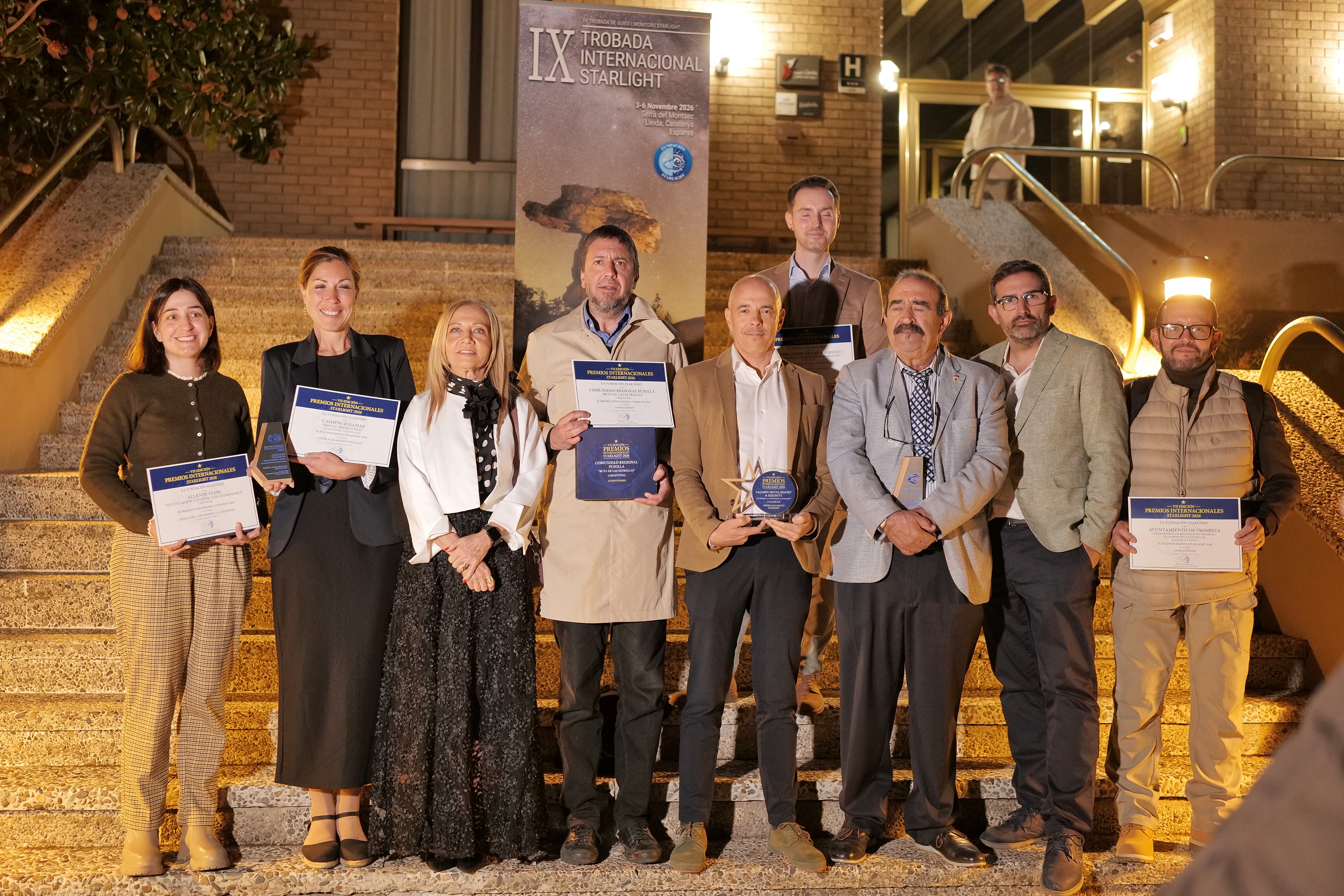 Winners of the 7th International Starlight Awards / Credit: Fr. Fernando Ruiz
Training, outreach and communication: strengthening professional skills
The 7th Starlight Astronomical Monitors and Guides Meeting showcased initiatives that reflect the increasing diversity of experiences connected with the night sky.
Presentations explored connections between astronomy and architectural heritage, mythology, popular culture, crafts and natural phenomena such as marine bioluminescence.
Publications were also presented, including the poetry collection Río de estrellas, by Pilar Alpuente and Raúl Moreno, alongside initiatives relating to the cultural interpretation of the sky, environmental education and observing experiences.
The Meeting also featured science outreach contributions from the Kuffner Observatory in Vienna, an update on astronomical developments presented by Rafael Bachiller, and the robotic astronomy facilities at the Observatori del Montsec.
Astrotourism communication provided another area for reflection, with presentations on the responsibilities of the media, tourism and artificial intelligence. Speakers addressed changing information-search habits, the importance of building accurate narratives and the need to measure tourism success beyond visitor numbers.
These issues are directly connected to the training provided by the Starlight Foundation through its Starlight Monitors, Guides and Auditors programmes, which are essential to developing quality experiences and professionals capable of interpreting the sky and its associated heritage.
New meetings and a shared roadmap
The final day included a round table on the challenges facing astrotourism, moderated by Antonia Varela, with representatives of territories and projects from Spain, Portugal and Andorra.
The session brought together issues that had run throughout the Meeting: the need to improve institutional cooperation, ensure project continuity, advance training and accessibility, strengthen management models and preserve the natural resource on which all these activities depend.
Participants also shared the work of the Starlight Foundation’s committees and groups, which provide spaces for cooperation and the development of initiatives within the Network.
The programme concluded with visits to the Parc Astronòmic del Montsec and the Observatori Astronòmic del Montsec, two complementary facilities that reflect the importance of public outreach and scientific research for the host territory.
Looking ahead to 2027, the 10th International Starlight Astrotourism Meeting will be held in Andorra Comapedrosa. Meanwhile, the Argentine province of Córdoba has emerged as a possible host for a future edition of the Starlight America Regional Meeting, although this has yet to be confirmed.
The discussions in Montsec led to a shared conclusion: the growth of astrotourism must go hand in hand with stronger night sky protection, specialist training, cooperation between territories and institutional commitment.
The Starlight Foundation closes this ninth edition by thanking the host institutions, speakers, professionals and participating organisations for their involvement. It reaffirms its commitment to ensuring that the night sky is recognised, protected and shared as a heritage belonging to all humanity.