World Tourism Day: The Starlight Foundation’s Journey from Protecting the Sky to Developing Astrotourism
The Starlight Foundation looks back at the progress that has made the starry sky a protected heritage and a source of opportunity for territories.
2026 / 09 / 24
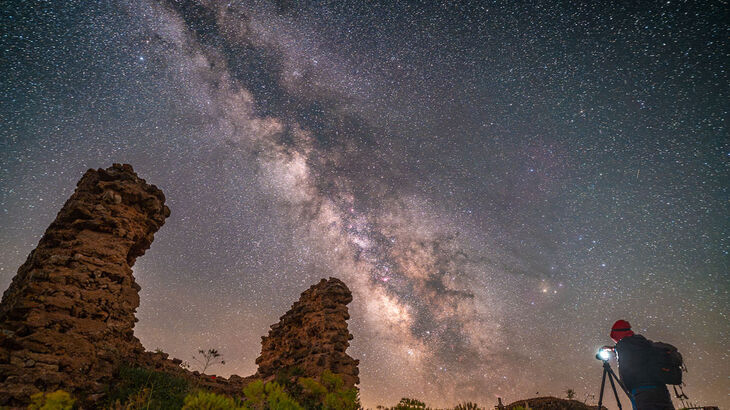
Every 27 September, World Tourism Day offers an opportunity to consider which resources in a territory deserve to be discovered and how tourism can help conserve them. For the Starlight Foundation, part of the answer emerges after dark: the starry sky is a form of natural, scientific and cultural heritage, and protecting it can create knowledge and opportunities for local communities.
This idea has guided the Starlight Foundation’s work since its beginnings. In 2007, the International Starlight Conference held on La Palma gave rise to the Declaration in Defence of the Night Sky and the Right to Starlight. The declaration, drawn up with the participation of representatives of international organisations and the scientific community, called for the preservation of sky quality and recognised its value to society. Its principles gave rise to an understanding of astrotourism in which observing the stars goes hand in hand with caring for the places from which we see them.
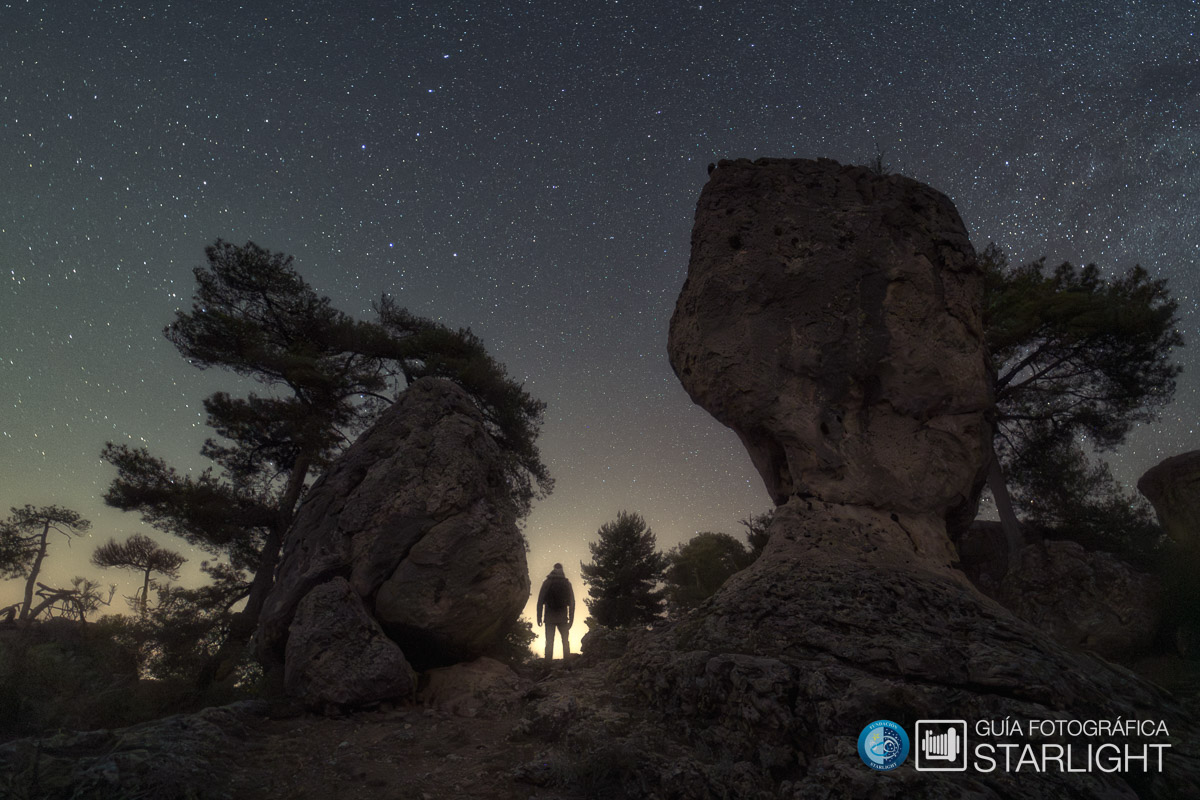 Starlight Photography Guide / Credit: LuzLux / Starlight Foundation
From a High-Quality Sky to a Destination Ready to Welcome Visitors
Astronomy tourism has grown because it offers an experience that can connect a wide range of disciplines and audiences. An astronomy observation can spark curiosity about science while opening a conversation about a territory’s landscapes, history, gastronomy or traditions. The Starlight Foundation defines astrotourism as a form of tourism that combines observation of the night and daytime sky with science communication and astronomy-related leisure activities.
Turning that potential into a tourism offer takes work. A good sky is the starting point; protection, training and a range of experiences make it possible to share it with visitors. With this in mind, the Foundation has developed a certification system that brings science and tourism together and recognises different types of sites and services, including reserves and tourist destinations, villages and towns, accommodation, stellar parks and stargazing viewpoints.
In Starlight Tourist Destinations, for example, the assessment considers both the quality of the sky and the measures in place to preserve it, as well as the infrastructure and activities that enable visitors to enjoy the nocturnal environment.
This work goes hand in hand with the training of monitors, guides and other professionals. Interpreting the sky requires astronomical knowledge, but also the ability to adapt it to each group, connect it with the territory and conduct activities with respect for the environment. Trained professionals can turn observation into an accessible, engaging experience while finding work opportunities linked to their communities.
The expansion of the Starlight Network shows how that original vision has found a response in a wide variety of places. According to the Starlight Foundation’s global figures for this commemoration, more than 300 sites hold Starlight certification, covering an area of over 170,000 square kilometres. More than 1,500 individuals and organisations have endorsed the Starlight Declaration. These figures reflect the commitment of territories to sky quality and the growing place of astrotourism in their tourism strategies.
A Guide to Share What Has Been Learned
One of the milestones of 2026 has been the presentation, with UN Tourism, of A Guide for the Development of Astrotourism. Officially launched at FITUR 2026, the guide offers advice on designing, developing and managing astrotourism products in destinations around the world. It addresses subjects such as planning, the conservation of sky quality, local community participation and the interpretation of astronomical and cultural resources.
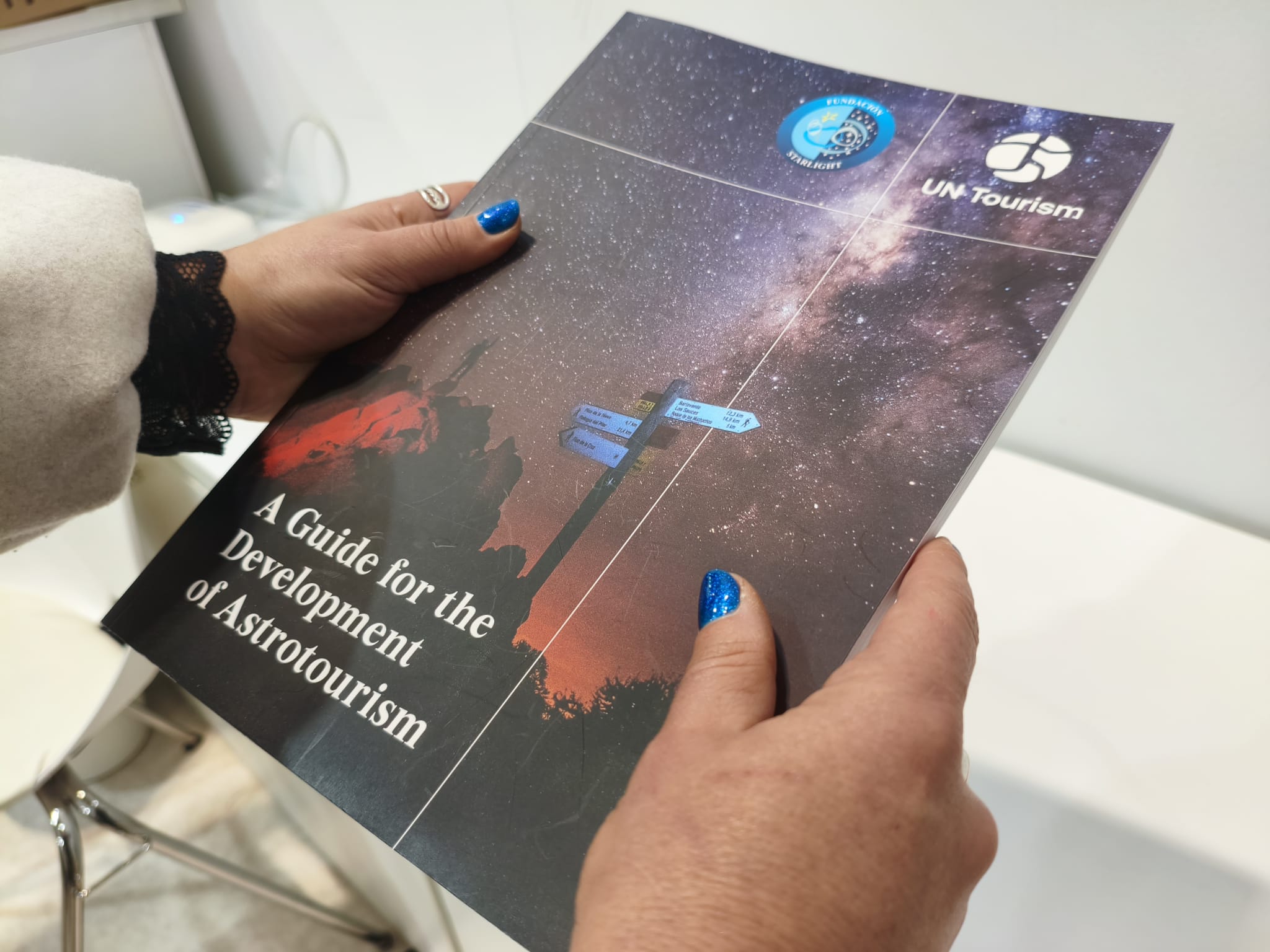 A Guide for the Development of Astrotourism, published by UN Tourism and the Starlight Foundation / Image credit: Turismodeestrellas.com
The publication is a step forward for a growing sector that needs shared points of reference. Every destination has its own landscape, stories and capabilities. Developing astrotourism therefore means identifying available resources, listening to local people and creating experiences suited to each place. The guide brings the knowledge gathered by the Starlight Foundation and by territories that have spent years working in this field to an international audience.
Interest in sky-related travel is also reflected in trends published by tourism platforms. In its travel predictions for 2025, Booking.com reported that 62% of travellers surveyed were interested in destinations with dark skies. The figure reflects an intention to travel and helps explain the appeal of these experiences, although it does not measure how many people ultimately travelled to observe the sky.
Growing interest in stargazing tourism was also reflected in data presented by Tripadvisor during the 123rd UN Tourism Executive Council, held in Segovia in 2025. As reported at the time by the Starlight Foundation, the platform put the global increase in astrotourism at 320% since 2022. The figure reflects the trend observed by Tripadvisor, although the publicly available documentation consulted does not specify the indicator used to calculate it.
Protecting the Night Is Also About Looking to the Future
Growth brings a responsibility: conserving the resource that makes it possible. Light pollution makes astronomical observation more difficult and disrupts natural darkness. But protecting the sky also involves addressing other threats, including radio-frequency interference that affects radio astronomy and the impact of large satellite constellations on research and views of the sky. The Starlight Foundation participates in working groups and discussions on these challenges and promotes public awareness as part of its response.
This concern is also reflected in the SDG 18 for the Protection of the Sky initiative, promoted by the Starlight Foundation and BPW Canarias to place the right to enjoy starlight and the conservation of the sky on the public agenda. In tourism, protecting the sky helps ensure that visitors’ experiences are compatible with the quality of life of the people who live in each destination.
On World Tourism Day 2026, the Starlight Foundation recognises the journey shared with destinations, accommodation providers, professionals, institutions and communities that have made the sky part of the way they present their territories. The La Palma Declaration established the principles; certification and training have helped put them into practice; and the guide produced with UN Tourism offers new tools for sharing them. The next step is to continue growing while protecting the night that makes every experience under the stars possible.