Final Days Before the Total Solar Eclipse: The Starlight Network Completes a Year of Preparation
The Starlight Foundation has strengthened training, public outreach, support for destinations and safe viewing ahead of a historic event for Spain.
2026 / 08 / 05
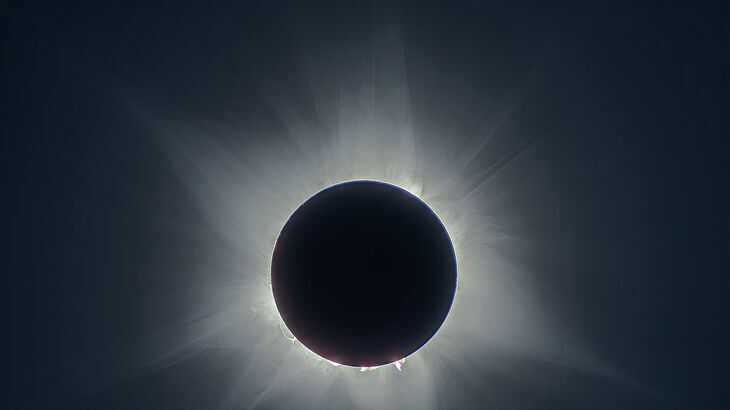
Next Wednesday, 12 August, exactly one week from now, Spain will experience one of the most significant astronomical events in its recent history: the first total solar eclipse visible from the Iberian Peninsula in more than a century. This exceptional occasion for science, public outreach and astrotourism has led the Starlight Foundation to work throughout the year with territories, professionals, institutions and organisations across its network.
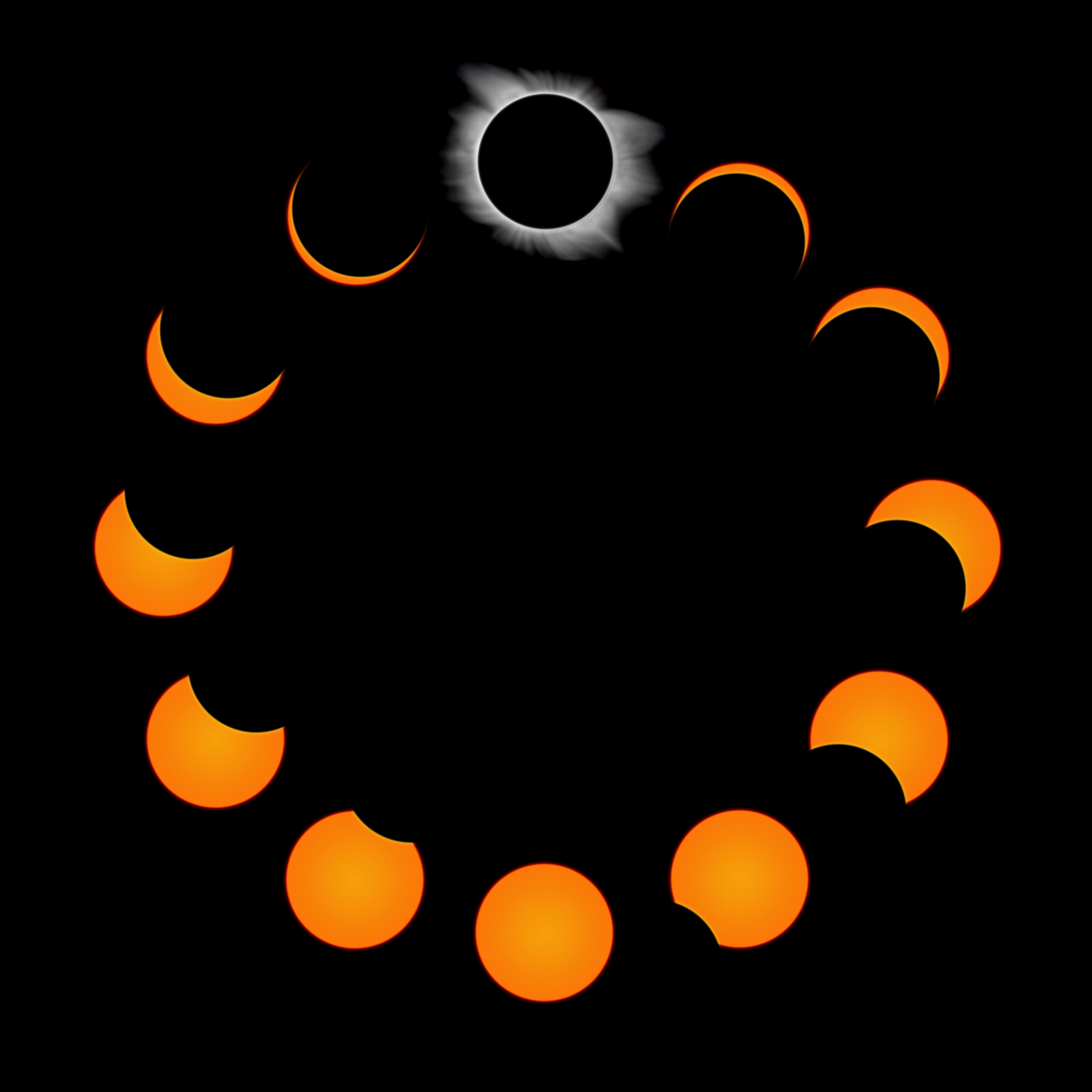
A total solar eclipse occurs when the Moon passes between Earth and the Sun and, as seen from a particular part of the planet, completely covers the solar disc. During totality, the sky darkens, ambient light decreases and the solar corona—the outermost layer of the Sun’s atmosphere—becomes visible.
Totality, however, can only be observed from within a specific path. According to Spain’s National Geographic Institute (IGN), this path will cross Spain from west to east, passing through numerous cities and territories from Galicia to the Balearic Islands. The eclipse will be total across much of the northern half of mainland Spain and in some central and eastern areas and parts of the Balearic Islands. Elsewhere in Spain, it will be seen as a partial eclipse.
Globally, the phenomenon will begin at 17:34 and end at 21:58 over the Atlantic Ocean—all times given in mainland Spain and Balearic Islands local time. Greatest eclipse will occur at 19:46 near Iceland, where totality will last a maximum of 2 minutes and 18 seconds. In Spain, the timing, duration of totality and altitude of the Sun will vary by location.
In A Coruña, for example, the eclipse will begin at 19:31, with totality occurring at around 20:28. It will last approximately 76 seconds, with the Sun about 12 degrees above the horizon. In Burgos, totality will last around 104 seconds, with the Sun just 8 degrees above the horizon. In Palma, maximum eclipse will occur at approximately 20:32, with the Sun extremely low, at around 2 degrees above the horizon.
This is one of the eclipse’s defining features—and one of its challenges: totality will occur at sunset, with the Sun very close to the horizon. Choosing a location with a wide, unobstructed view to the west will therefore be essential. Mountains, buildings, trees and other obstacles could otherwise block the view during the decisive minutes.
A Year of Training and Preparation
From the outset, the Starlight Foundation recognised that an event of this magnitude required more than marking a date on the calendar. The arrival of large numbers of visitors, crowds in certain areas, the need to ensure safe observation and the opportunity the eclipse presents for rural areas all called for advance planning, training and coordination.
In recent months, the Foundation has strengthened its training activities for those who will play an essential role on 12 August: tourism professionals, technical staff, guides and monitors, science communicators, municipal representatives, businesses, accommodation providers and the media.
One of the main initiatives has been the Third Starlight Eclipse Ambassadors Course, which combined a practical session in Prades with several online training days. Its purpose has been to strengthen a network of trained professionals able to explain the phenomenon accurately, promote safe observation, plan activities and support the public before, during and after the eclipse.
The course covered astronomy as well as public communication, territorial management, accessibility for different audiences, the organisation of experiences and the eclipse’s potential as a scientific, educational and astrotourism resource.
Preparing the Media
The Starlight Foundation has also paid particular attention to news and audiovisual coverage. The eclipse will attract national and international media and will be followed by millions of people, including many who will be unable to travel to the path of totality.
To support accurate reporting, the Foundation organised intensive training at the Royal Observatory of Madrid for professionals working in the press, radio, television, photography and audiovisual production. The programme combined theoretical content with a practical session on solar observation and image capture.
This initiative was complemented in July by a dedicated webinar on professional eclipse coverage. Participants explored the scientific aspects of the phenomenon, eye safety, crowd management, audiovisual storytelling, multicamera production and solar photography and video techniques.
The aim has been to prevent reporting errors and ensure that media interest is accompanied by accurate explanations, safe advice and images obtained using appropriate procedures.
Supporting Destinations and Responsible Astrotourism
Throughout the year, the Foundation has also provided ongoing guidance and advice to territories, public authorities, businesses and organisations across the Starlight Network. The eclipse is an exceptional opportunity to introduce more people to celestial heritage and support rural areas, provided that the arrival of visitors is managed responsibly.
This work has addressed the planning of observation sites, the selection of locations with suitable horizons, staff training, wildfire prevention, mobility, the protection of natural areas and the coordination of tourism services.
The Foundation has emphasised that the eclipse should be seen as more than an isolated event. It is an opportunity to bring astronomy closer to society and leave a lasting legacy in the territories: new professional skills, greater scientific awareness, high-quality astrotourism products and a deeper understanding of why the sky must be protected.
This approach has been shared at professional meetings, institutional gatherings and events such as FITUR 2026, where the Foundation placed the eclipse, territorial coordination and the development of stargazing tourism among the main topics on its agenda. The Eighth International Starlight Meeting, held in Soria, also brought together destinations, specialists and organisations to discuss eclipse preparations and the sustainable management of astrotourism.
A Guide to Enjoying the Eclipse Responsibly
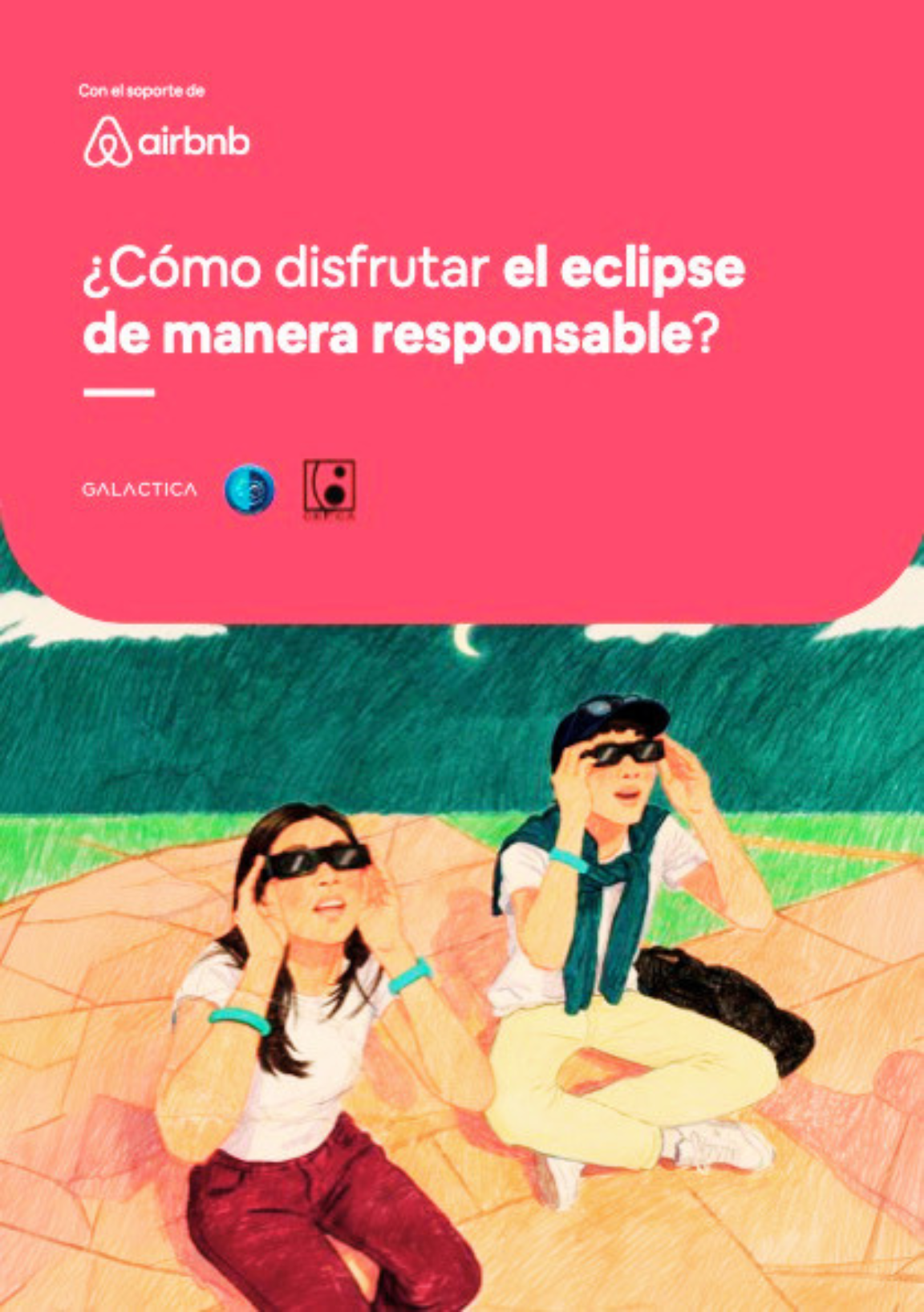
Among the public information resources developed in recent months is a guide promoted by Airbnb and produced in collaboration with the Starlight Foundation and the Centro de Estudios de Física del Cosmos de Aragón (CEFCA).
The publication provides information to help readers understand the phenomenon, choose a location, organise travel and observe the eclipse responsibly. It also highlights territories with high-quality skies and explains how the eclipse can support sustainable development when tourism is planned with knowledge and respect for the environment.
The Starlight Network Prepares to Watch the Sun
Starlight Tourist Destinations, Starlight Reserves, Starlight Towns and Cities, accommodation providers, businesses, Stellar Parks, monitors and organisations associated with the Foundation have prepared educational activities and observation experiences across Spain.
The network’s reach will allow people to experience the eclipse in a wide variety of settings, guided by shared principles: scientific accuracy, safety, sustainability, environmental protection and recognition of the sky as a shared heritage.
The Starlight Foundation’s Board of Trustees and team will travel to Muriel Viejo, Soria, a Starlight Town within the path of totality. There, they will share the experience with collaborators, professionals, Starlight Network representatives and the media, highlighting both the quality of the municipality’s sky and its longstanding commitment to astrotourism.
Safety: An Absolute Priority
Direct observation of the Sun can cause serious and irreversible eye damage. During all partial phases, including those immediately before and after totality, observers must use dedicated eclipse glasses that comply with ISO 12312-2:2015, carry an authentic CE marking and clearly identify the manufacturer and provide instructions for use. Ordinary sunglasses, smoked glass, X-rays, photographic negatives and other improvised filters are not safe.
Optical instruments—including telescopes, binoculars, cameras and telephoto lenses—require dedicated solar filters fitted in front of the objective lens. They must never be used to look at the Sun through eclipse glasses alone, as concentrated radiation can damage the filter and cause immediate injury.
Only within the path of totality, and only during the brief moments when the solar disc is completely covered, can the phenomenon be viewed without a filter. As soon as any part of the Sun reappears, protective glasses must be put back on.
The Starlight Foundation recommends checking the exact times for the chosen location in advance using the official tools provided by the IGN and the Eclipse Trilogy portal, following the instructions of local authorities and arriving early at organised observation sites. It will also be essential to plan journeys, avoid stopping on roads or in unauthorised locations, and take particular care because of the high risk of wildfires in August.
One week remains. After years of preparation and months of intensive work, Spain is about to look to the sky. The Starlight Foundation and its entire network approach the final countdown with a shared goal: for the total solar eclipse of 12 August to be a safe, scientifically sound, sustainable and unforgettable experience—and for its legacy to endure long after light returns to the landscape.