The 8th Starlight Meeting in Soria Charts the Future of Astrotourism and Calls for Action to Protect Dark Skies
The Starlight Foundation brought together experts, destinations, and institutions in the city of Soria to define the key challenges facing the astrotourism sector: sustainability, professionalization, innovation, and responsible tourism management under t
2025 / 10 / 28
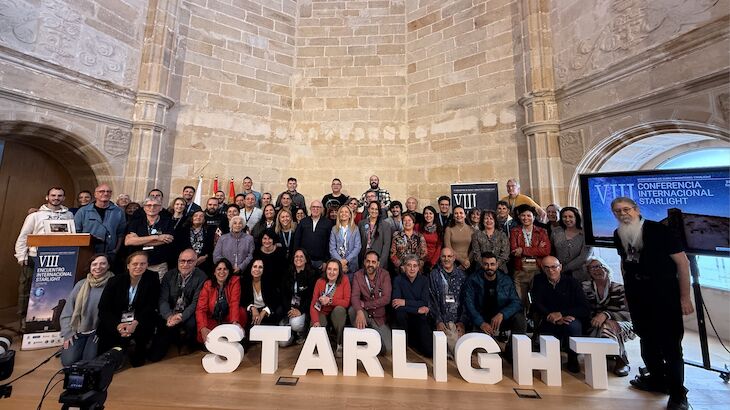
From October 22 to 24, Soria became the global epicenter of astrotourism and night sky protection by hosting the 8th International Starlight Meeting, organized by the Starlight Foundation in collaboration with the Provincial Council of Soria
Over three days, professionals from tourism, astronomy, science communication, and territorial management debated the role of dark skies as an environmental, cultural, and economic resource. The meeting reinforced the commitment to the Starlight Declaration of La Palma and to the values of Sustainable Development Goal 18 (SDG 18): the protection of the night sky and universal access to starlight.
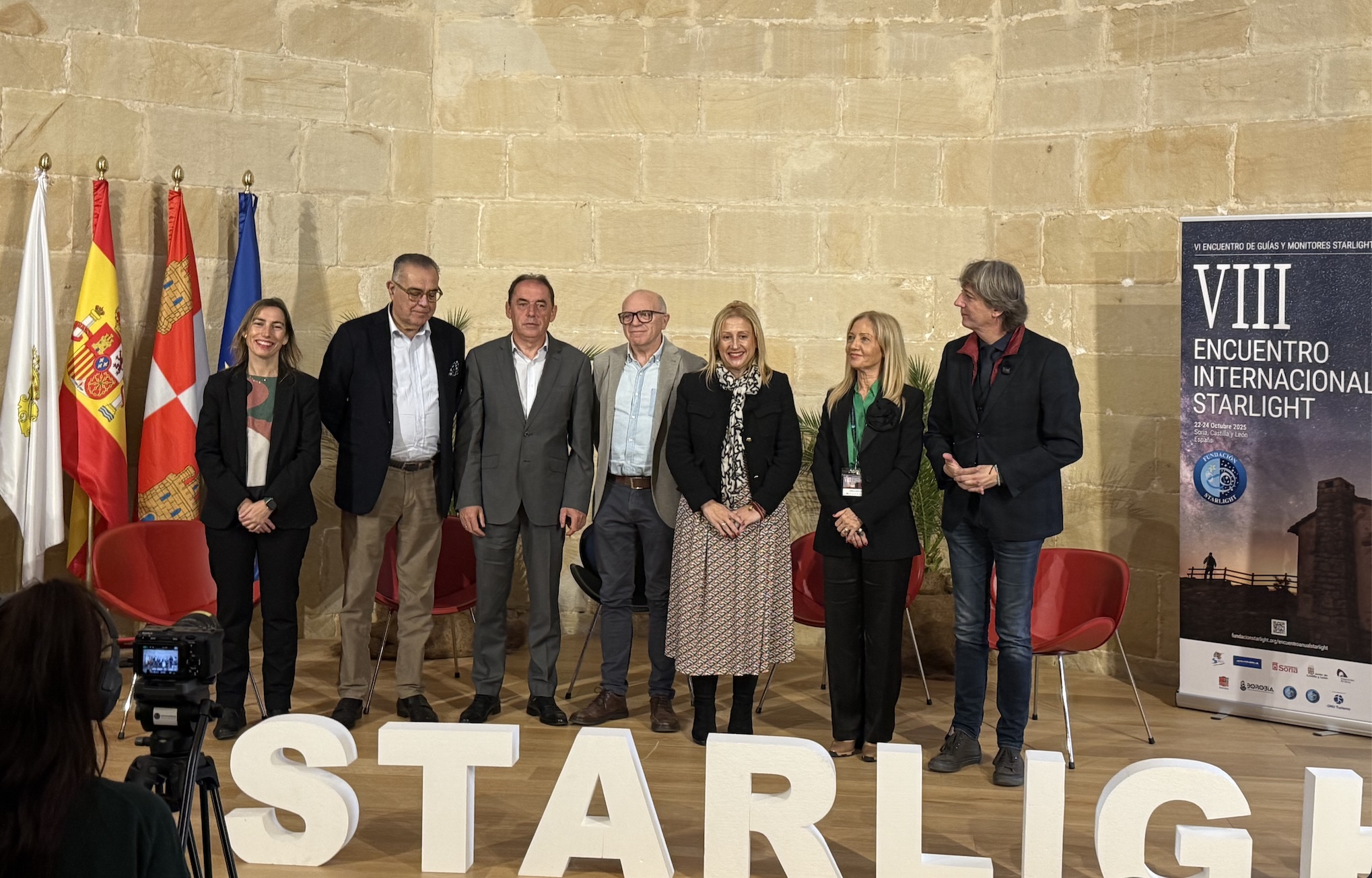 Authorities during the presentation ceremony of the 8th Starlight Meeting in Soria / Credit: Turismodeestrellas.com
The Solar Eclipse Trio: Spain at the Center of Global Attention
While the meeting addressed a wide range of topics, the undisputed protagonists were the three solar eclipses that Spain will experience in 2026, 2027, and 2028, with special emphasis on the first of them.
On August 12, 2026, Spain will witness one of the most anticipated astronomical events of the century: a total solar eclipse that will reach full totality exclusively from Spanish territory. The path of totality will cross the Iberian Peninsula from Galicia to the Balearic Islands, with an approximate width of 290 kilometers, occurring at sunset and allowing for unique images in which the eclipsed Sun merges with the horizon
According to estimates from the National Eclipse Commission, the phenomenon is expected to attract more than 17 million observers, including around five million international tourists. This unprecedented challenge, as highlighted during the meeting, requires careful planning, training, and coordination in order “not to fail in the attempt”
A Global Epicenter of Totality
Conclusions shared by experts such as Rafael Bachiller, Director of the Spanish National Astronomical Observatory and head of the National Eclipse Commission; Óscar Martín Mesonero, eclipse chaser and science communicator from the Startrails initiative; and Mohamad Sol, astrophotographer and promoter of the eclipse262728 initiative, confirmed that Spain will become the global epicenter of totality on that date
Speakers warned that the duration of totality will be brief—around one to two minutes in many locations—making location choice, visibility, and quality of experience decisive factors.
Key Messages from the 8th Starlight Meeting
Experience totality, not a partial eclipse.
Experts stressed the importance of positioning oneself within the path of totality. As Rafael Bachiller recalled, “On August 13, 2026, Spaniards will be divided between those who saw the eclipse and those who did not.” Mohamad Sol added: “Experiencing totality changes the way you look at the sky; thousands of people simultaneously feel the most primitive human sense of awe.”
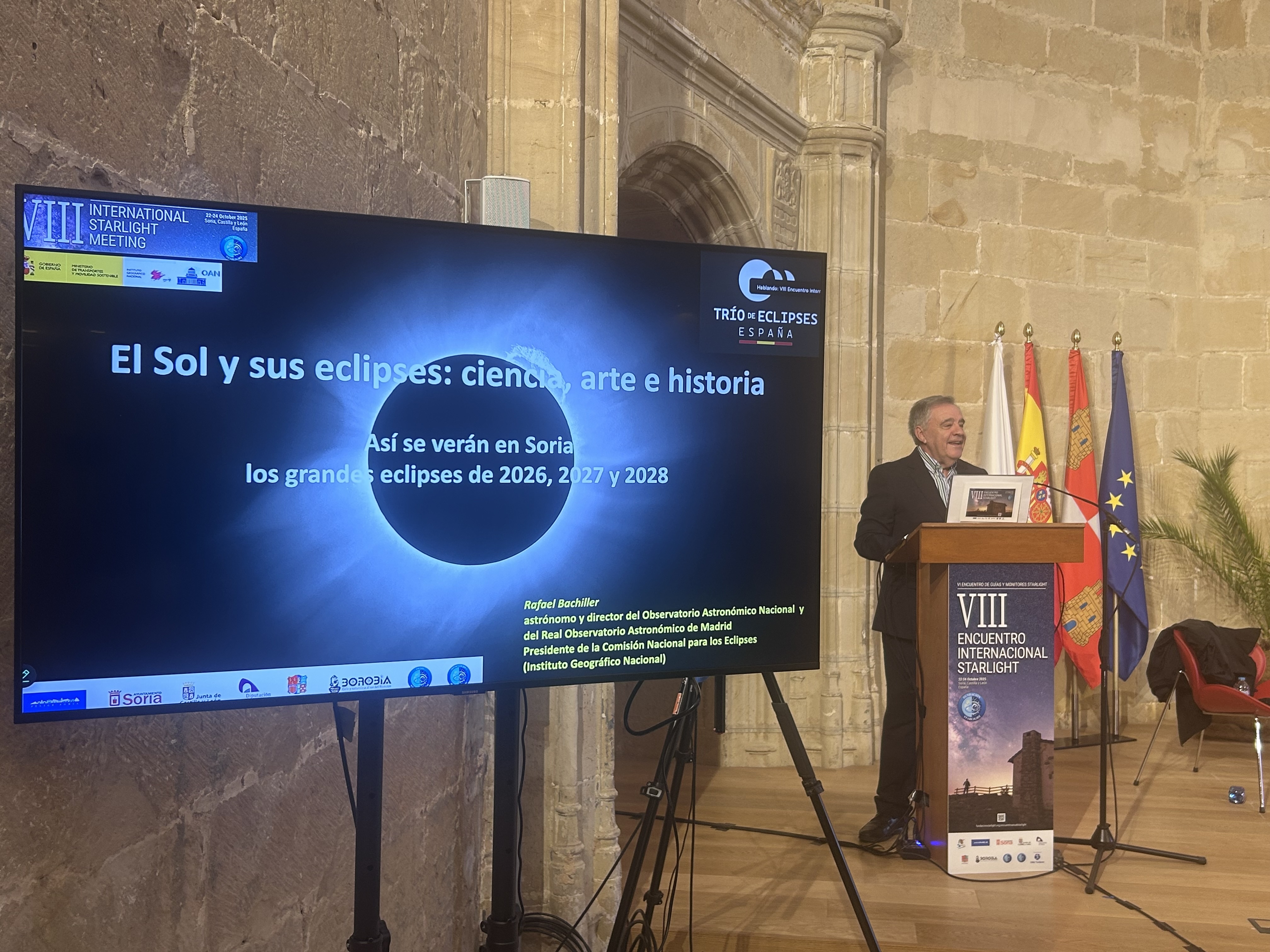 Public lecture by Rafael Bachiller during the 8th Starlight Meeting in Soria / Credit: Turismodeestrellas.com
Eye safety: essential to enjoy the eclipse without risk.
Óscar Martín Mesonero reminded attendees that the Sun is “no more dangerous during an eclipse than on any other day,” but the temptation to stare at it longer can cause irreversible damage. The use of certified ISO 12312-2 eclipse glasseswas strongly emphasized, along with avoiding homemade filters or unprotected optical instruments
Plan ahead—and wisely.
The difference between a planned eclipse and an improvised one, Mesonero warned, “is the difference between territorial success and a major failure.” Recommendations included choosing elevated west-facing locations, arriving early, avoiding travel during critical hours, and planning overnight stays to reduce post-eclipse traffic congestion and to enjoy the night sky
A major opportunity for astrotourism businesses and accommodations.
As emphasized by Antonia Varela, Director of the Starlight Foundation, “the eclipse will put the capacity of Spanish astrotourism to the test.” Rather than large-scale mass events, speakers advocated for safe, educational, and welcoming experiences before and after the eclipse, strengthening training, quality, and sustainability standards
Beyond the Eclipse: A Shared Horizon
Although the 2026 total solar eclipse was the central focus due to its scientific relevance and tourism potential, the meeting primarily served to outline the future of astrotourism.
As Antonia Varela stated, “This has been a meeting to think together about the future of the sky, to understand that astrotourism is not a trend, but a tool for change, rural development, and real sustainability.”
Five Strategic Pillars for the Future of Astrotourism
-
Sustainability and protection of the night sky
Combating light pollution was identified as a transversal priority. Protecting dark skies is not only an aesthetic or scientific concern, but an environmental and cultural necessity. The meeting reaffirmed the Starlight Declaration of La Palma and promoted the integration of SDG 18 into public policies and sustainable tourism strategies -
Professionalization and prevention of unqualified practices
Participants strongly emphasized the need for proper training, Starlight certifications, and quality interpretation. Visitor experience, safety, and credibility depend on the expertise of those guiding the observation of the sky -
Innovation, quality, and differentiation
The future of the sector lies in creativity and uniqueness. Pioneering experiences combining astronomy with gastronomy, art, wellbeing, astrophotography, sensory tastings, and inclusive tourism were presented, demonstrating how the sky can be experienced with all senses without losing scientific rigor -
Capacity management and responsible tourism
The risk of overcrowding—especially in the context of the 2026 eclipse—was highlighted. Experts called for early planning that considers carrying capacity, mobility, safety, and respect for natural environments. “It is not about attracting more visitors, but about welcoming them better,” summarized one speaker -
Growth rooted in science and respect for the night
The shared conclusion was clear: astrotourism must continue to grow based on scientific knowledge, quality, and respect for the night. The Foundation recalled that the movement was born from science, and its future depends on maintaining that foundation
International Starlight Awards 2025
The meeting also hosted the 2025 International Starlight Awards ceremony, recognizing exemplary projects committed to astrotourism and dark sky protection. Awardees included Océano de Experiencias SL, Korres, the Inclusive Astrotourism Document, and La Posada del Candil. Additional recognition was given to Birra Láctea, La Serena Neighborhood Association (Chile), and Magic Experience
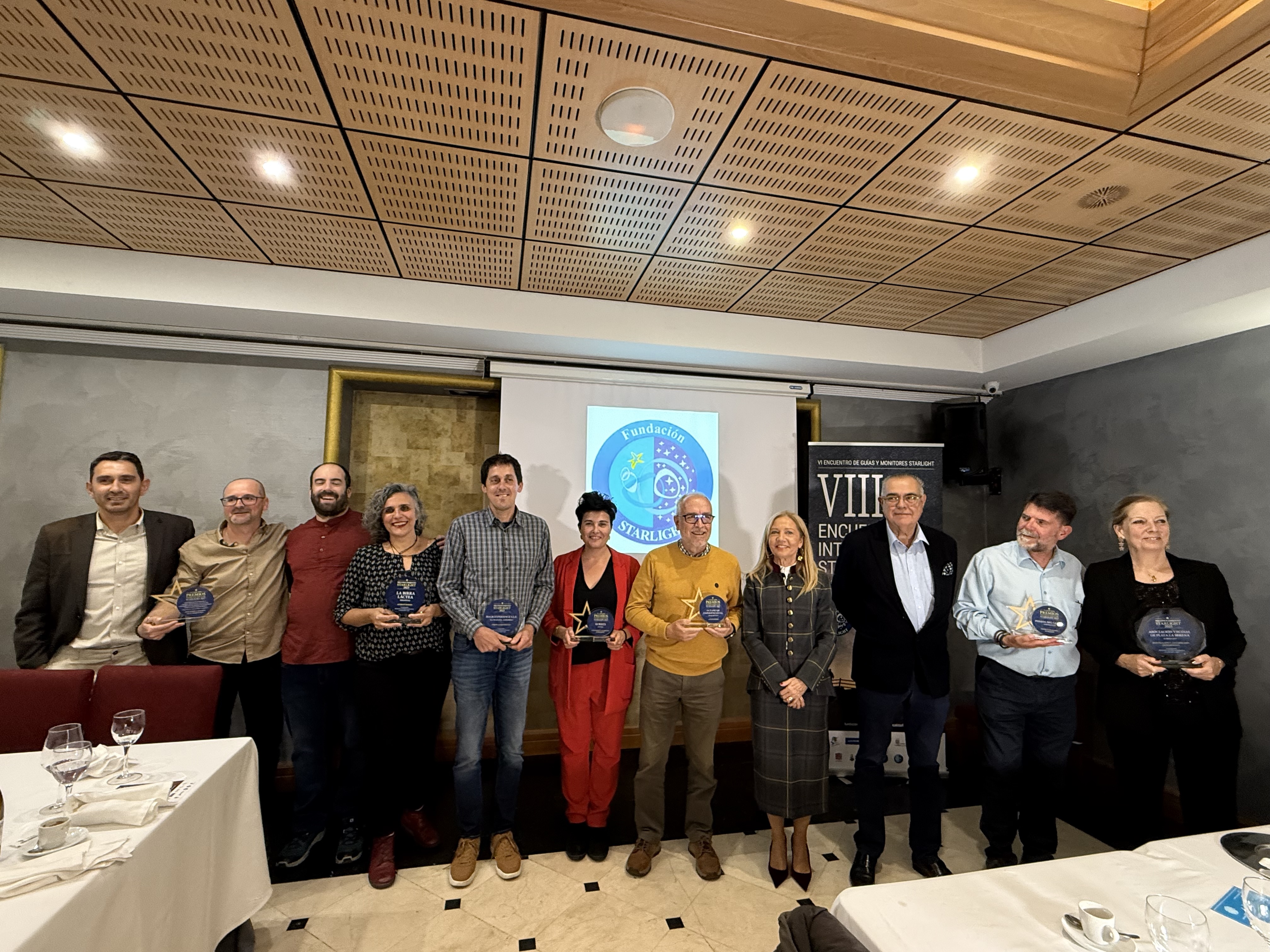 Credit: Turismodeestrellas.com
Soria: A Stellar Territory
As the first Spanish province to have its entire territory certified as a Starlight Reserve, Soria provided the ideal setting for this global reflection. Activities included public lectures, eclipse simulations, astronomical observations at the Borobia Observatory, and cultural routes through the city, demonstrating how celestial and terrestrial heritage can be woven into a single narrative
A Final Call: Protecting the Sky Means Protecting the Future
The 8th International Starlight Meeting marked a turning point. It left a clear roadmap: protect dark skies, professionalize the sector, innovate without losing rigor, and manage tourism responsibly.
With the countdown to the 2026 total solar eclipse underway, the Starlight Foundation reaffirmed its commitment: that no one is left out of the sky—and that everyone learns to care for it